

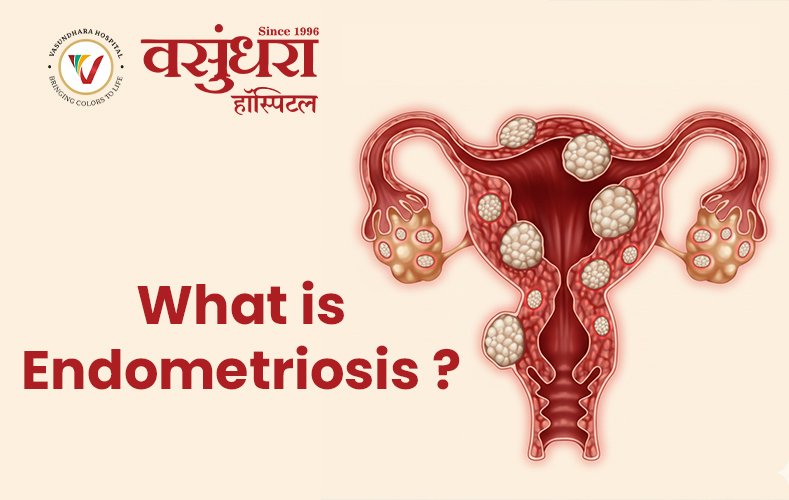
What is Endometriosis?
Endometriosis is a long-term gynaecological condition that can quietly disrupt a woman’s health, comfort, and fertility. Many women live with symptoms for years without realising the underlying cause. When left untreated, the condition may gradually affect daily life, emotional well-being, and reproductive potential.
Endometriosis develops when tissue that behaves like the lining of the uterus begins to grow in areas where it does not belong, such as the ovaries, pelvic lining, fallopian tubes, bowel, or bladder. These misplaced cells respond to monthly hormonal changes, but unlike normal menstrual tissue, they cannot exit the body.
As a result, this leads to inflammation, internal irritation, scar formation, and adhesions, which can cause persistent pain and reproductive complications.
Different Types of Endometriosis
The condition is classified based on how deep the tissue grows and where it is located. A woman may have one or multiple forms simultaneously.
-
-
Superficial Peritoneal Endometriosis : This is the most commonly observed type. The abnormal tissue appears on the thin membrane lining the pelvic cavity and may cause pain, especially during menstruation.
-
Ovarian Endometrioma : This form involves cyst formation on the ovaries, filled with old, dark fluid. These cysts can interfere with normal ovarian function and may reduce egg quality if left untreated.
-
Deep Infiltrating Endometriosis : A more aggressive type where lesions extend deeper into organs such as the bladder, intestines, or the tissue between the rectum and vagina. This form often causes severe pain and requires specialised care.
-
What Leads to Endometriosis?
The exact reason why endometriosis develops is still being studied, but research suggests that multiple factors may work together, including:
- Reverse menstrual flow, where menstrual material moves back into the pelvic cavity
- Genetic predisposition, increasing risk among close female relatives
- Hormonal influence, particularly estrogen
- Immune system imbalance, allowing abnormal tissue to survive and grow
Because causes vary, treatment must always be individualised.
Common Symptoms of Endometriosis
Symptoms differ widely from one woman to another. Some experience intense discomfort, while others may remain symptom-free for years.
Common signs include:
- Persistent pain in the lower abdomen or pelvis
- Painful menstrual cycles that worsen over time
- Discomfort during or after sexual intercourse
- Difficulty becoming pregnant
- Digestive complaints such as bloating, constipation, or fatigue
- Heavy or irregular menstrual bleeding
The intensity of symptoms does not always reflect how advanced the condition is.
How is Endometriosis Diagnosed?
Endometriosis can be challenging to detect early, often resulting in delayed diagnosis. A thorough evaluation may include:
- Clinical pelvic examination
- Ultrasound imaging to identify ovarian cysts
- MRI scans for detailed pelvic assessment
- Laparoscopy, a minimally invasive procedure that allows direct visual confirmation and remains the most reliable diagnostic method
Early diagnosis helps prevent disease progression and protects fertility.
Patient Story: Endometriosis Treatment at Vasundhara Hospital
Treatment Options for Endometriosis
Pain Management
Anti-inflammatory medications, heat therapy, physical activity, and lifestyle modifications are often the first line of symptom control.
Hormonal Treatment
Hormonal therapy works by reducing estrogen levels, limiting the growth of endometrial-like tissue. Options may include oral contraceptives, progestins, or hormone-regulating medications.
Surgical Management
When pain becomes difficult to manage or reproductive health is compromised, surgical treatment may be advised. Laparoscopic excision aims to remove abnormal tissue while preserving healthy organs. In extreme cases, more extensive surgery may be considered.
IVF for Endometriosis-Related Infertility
For women facing difficulty conceiving, IVF (In Vitro Fertilization) can significantly improve pregnancy chances by bypassing affected reproductive structures and optimizing embryo development.
When Should You Consult a Doctor?
Medical evaluation is recommended if you experience:
- Ongoing pelvic pain affecting daily activities
- Menstrual pain that increases over time
- Pain during intimacy
- Trouble conceiving despite regular attempts
- Recurrence of symptoms after treatment
Timely consultation allows better symptom control and fertility planning.
Vasundhara Hospital – A Trusted Centre for Endometriosis Care
Women searching for advanced fertility solutions often look for the best IVF center in Jodhpur, and many choose Vasundhara Hospital for its ethical practices, personalized treatment plans, and consistent success outcomes.
With a strong focus on endometriosis-related infertility, Vasundhara Hospital has earned recognition as one of the best fertility centers in Jodhpur and Rajasthan, offering evidence-based fertility care supported by experienced specialists and modern reproductive technology.
Also Read:
