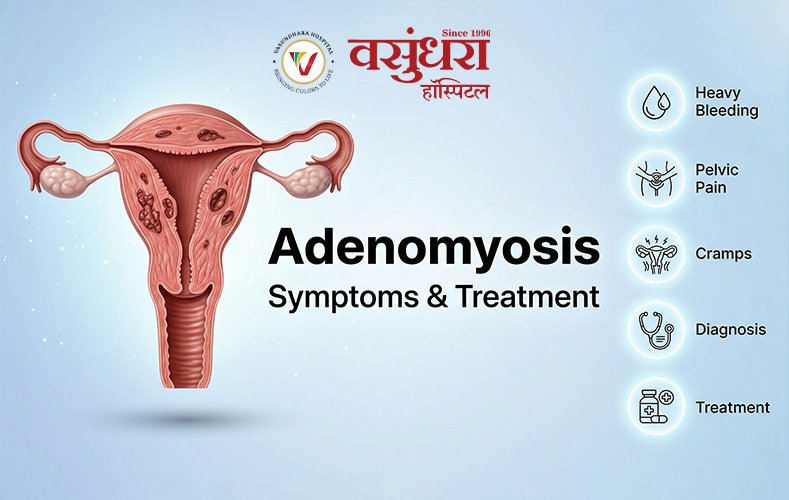
Adenomyosis is a common yet often misunderstood uterine condition affecting many women during their reproductive years. Despite its prevalence, it is frequently underdiagnosed due to overlapping symptoms with other gynecological conditions.
What is Adenomyosis?
Adenomyosis is a condition in which the inner lining of the uterus (endometrium) grows into the muscular wall of the uterus (myometrium).
👉 Normally, these two layers are separate. 👉 In adenomyosis, this boundary is disrupted.
What happens then?
During each menstrual cycle, this misplaced tissue behaves like normal lining — it thickens, breaks down, and bleeds. But since it is trapped within the muscle, it leads to:
Uterine enlargement
Inflammation
Painful and heavy periods
In simple terms: Adenomyosis = Period lining growing inside the uterine muscle, causing pain and heavy bleeding.
Causes & Risk Factors
The exact cause of adenomyosis is still not fully known, but medical research suggests several possible explanations:
1. Invasive Tissue Growth
Endometrial cells may invade the uterine muscle directly.
2. Uterine Inflammation After Childbirth
Post-delivery inflammation may disrupt the normal boundary between uterine layers.
3. Stem Cell Theory
Bone marrow stem cells might transform into endometrial tissue inside the uterus.
4. Hormonal Influence
Estrogen plays a major role — higher levels may stimulate abnormal tissue growth.
5. Previous Uterine Surgery
Procedures like:
C-section
Fibroid removal
D&C
may increase risk by weakening the uterine wall.
Who is at higher risk?
Women aged 30–50
Those with multiple pregnancies
History of uterine surgeries
Signs & Symptoms
Here are the most common symptoms of adenomyosis:
1. Heavy Menstrual Bleeding
Periods become unusually heavy or prolonged.
2. Severe Menstrual Cramps
Pain worsens over time and may be debilitating.
3. Chronic Pelvic Pain
Persistent discomfort even outside periods.
4. Enlarged Uterus
May cause bloating or a feeling of fullness.
5. Pain During Intercourse
Deep pain during or after sex.
6. Blood Clots During Periods
Passing large clots frequently.
Diagnosis: Step-by-Step Approach
Diagnosing adenomyosis requires a combination of clinical evaluation and imaging:
1. Clinical Examination
Doctor checks for enlarged or tender uterus
2. TVUS (Transvaginal Ultrasound)
First-line imaging tool
Helps detect thickened uterine walls
3. MRI (Magnetic Resonance Imaging)
More accurate than ultrasound
Differentiates adenomyosis from fibroids
4. Histology (Definitive Diagnosis)
Confirmed only after examining uterine tissue (usually post-hysterectomy)
Adenomyosis & Fertility
This is one of the most common concerns — and the answer is reassuring.
👉 Can you get pregnant with adenomyosis?
Yes, many women conceive naturally.
👉 Possible challenges:
Implantation issues
Increased miscarriage risk
Reduced uterine receptivity
👉 Positive news:
Treatments like hormonal therapy or IVF can improve outcomes
Early diagnosis significantly helps
Conclusion
Adenomyosis can impact quality of life, but the good news is — it is manageable and treatable. Early diagnosis, the right treatment plan, and expert care can make a significant difference.