

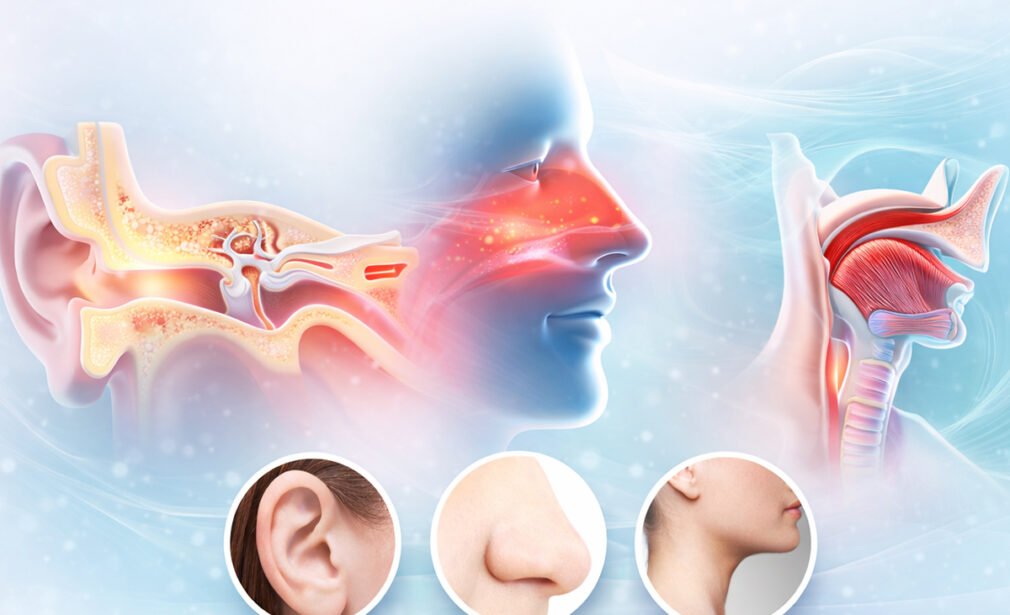
ENT
Vasundhara Hospital consists of highly skilled ENT specialists focusing on restoring your senses and improving your overall quality of life. The Ear, Nose, and Throat (ENT) department provides empathetic & innovative medical care and is managed by a highly experienced Gold Medalist Otolaryngologist and Head-Neck Surgeon having extensive years of experience in dealing with critical patients with complex ENT conditions.
The ENT department is specialized in the advanced medical and surgical management of disorders affecting the ear, nose, throat, and head & neck regions. The department performs surgical procedures which include the most current endoscopic and reconstructive techniques. The Centre is manned by an experienced and highly skilled ENT doctor that offers advanced solutions for Endoscopic Sinus Surgery, Rhinoplasty, Head & Neck Surgeries, as well as the comprehensive treatment of voice and swallowing disorders.
Working with an empathetic approach, our ENT Specialist recommends medical or surgical treatment options for sensory and throat problems after several months of all other treatments, which fail to provide any relief to the patient’s chronic sinusitis, severe allergies, or hearing loss. There are different kinds of surgical and non-surgical treatments that the doctor may recommend after thoroughly assessing your health condition.
Why Choose us
Vasundhara Hospital is well equipped with advanced medical equipment and a team led by a highly experienced Consultant ENT & Head-Neck Surgeon, Dr. Sana Parveen. The department is backed up by modern endoscopic instruments and advanced diagnostic equipment to ensure the highest precision for routine outpatient care and complex surgical interventions.
What We Offer
- Ear, Nose & Throat Disorders
- Endoscopic Sinus Surgery
- Rhinoplasty & Nasal Procedures
- Head & Neck Surgeries
- Vertigo & Balance Disorders
- Voice & Swallowing Disorders
- Hearing Loss & Eardrum Treatments
- Nasal Polyps & DNS (Bone Growth)
- Tonsil & Severe Throat Infections
- Advanced Sinus & Allergy Care
Meet Vasundhara Hospital's ENT Expert

Frequently asked questions
Accordion Content
Orthopedicians treat a vast array of musculoskeletal conditions, including but not limited to:
- Fractures: Broken bones throughout the body (e.g., arm fracture, leg fracture, hip fracture).
- Sprains and Strains: Injuries to ligaments (sprains) and muscles or tendons (strains), such as ankle sprains or hamstring strains.
- Arthritis: Various forms of joint inflammation, including osteoarthritis (wear and tear), rheumatoid arthritis (autoimmune), and gout. They manage the pain and functional limitations caused by arthritis.
- Back and Neck Pain: Conditions like herniated discs, spinal stenosis, sciatica, and general backaches and neck pain.
- Shoulder Problems: Rotator cuff tears, dislocations, frozen shoulder, and impingement syndrome. For example, difficulty lifting your arm could be due to a rotator cuff issue.
- Elbow, Wrist, and Hand Issues: Carpal tunnel syndrome, tennis elbow (lateral epicondylitis), golfer’s elbow (medial epicondylitis), and trigger finger. Numbness in your fingers might be a sign of carpal tunnel syndrome.
- Hip Problems: Bursitis, labral tears, and hip impingement. Pain in your groin or outer hip could indicate a hip issue.
- Knee Problems: Ligament tears (ACL, MCL, PCL), meniscus tears, patellar tendonitis, and kneecap dislocations. A twisting injury during sports could lead to an ACL tear.
- Foot and Ankle Problems: Plantar fasciitis, bunions, hammertoes, Achilles tendonitis, and ankle instability. Heel pain that is worse in the morning is a common symptom of plantar fasciitis.
- Sports Injuries: A wide range of injuries sustained during athletic activities.
- Congenital Deformities: Conditions present at birth affecting the musculoskeletal system, like clubfoot or scoliosis.
- Bone Tumors and Infections: Though less common, orthopedicians also manage these conditions.
You should consider seeing an orthopedician if you experience any of the following:
- Persistent or severe pain in your bones, joints, or muscles that doesn’t improve with home care.
- Limited range of motion or difficulty moving a joint.
- Swelling, redness, or warmth around a joint.
- Deformity of a bone or joint.
- Numbness or tingling in your arms, legs, hands, or feet.
- Instability of a joint (feeling like it might give way).
- Difficulty performing daily activities due to musculoskeletal pain or limitations.
- A sports injury that is not improving.
- Review your medical history: They will ask about your current symptoms, past injuries, medical conditions, medications, and family medical history. Be prepared to provide detailed information about your pain (when it started, what makes it better or worse, its location, etc.).
- Perform a physical examination: This will involve assessing your range of motion, strength, reflexes, gait (how you walk), posture, and palpating (feeling) the affected area. They might ask you to perform specific movements to evaluate your joint function.
- Order imaging tests if needed: Depending on your condition, the orthopedician may order X-rays, MRI scans, CT scans, or other imaging studies to get a better look at your bones and soft tissues. Sometimes, X-rays can be done during the initial visit.
- Discuss treatment options: Based on the evaluation, the orthopedician will discuss possible diagnoses and treatment plans. This might include non-surgical options like physical therapy, medication, injections, braces, or lifestyle modifications. If surgery is a potential option, they will explain the procedure, its risks and benefits, and the expected recovery process.